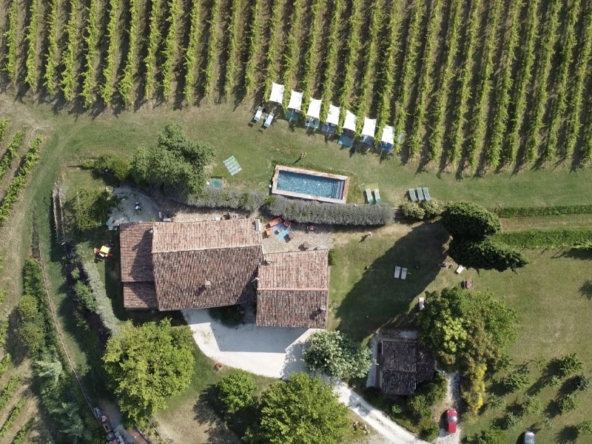
A beautifully restored farmhouse surrounded by olive groves, guests enjoying breakfast beneath a shaded portico, long summer evenings celebrating local food and wine.
At first glance, it could be either an agriturismo or a country house. In reality, however, these two hospitality businesses are built on very different foundations. While they may share the same rural setting and timeless charm, they differ in the way they operate, the regulations that govern them and the type of experience they are designed to offer.
Understanding these differences before investing is essential. The right choice is not simply about the property itself, but about the kind of business you want to build and the experience you want to offer your future guests.
What Is a Country House?
A country house is a rural hospitality business designed to welcome guests in an authentic countryside setting.
Unlike an agriturismo, its primary focus is hospitality. Owners have the freedom to shape the property around the type of experience they wish to offer, whether that means creating a boutique retreat, a wellness destination, an elegant venue for intimate events or simply a peaceful escape immersed in nature.
Although many country houses are surrounded by vineyards, olive groves or extensive gardens, their identity is not defined by agricultural production. Instead, the emphasis is placed on accommodation, personalised service and creating memorable stays for guests.
For many owners, a country house also becomes a way of life. It is not uncommon to live on the property while welcoming visitors from around the world, combining home and hospitality in one inspiring setting.
What is an Agriturismo?
One of the most common misconceptions is that an agriturismo is simply another name for rural accommodation. In reality, an agriturismo is first and foremost an agricultural enterprise that also offers hospitality.
The accommodation is closely connected to the life of the farm, where agriculture remains the heart of the business. Depending on the property, this may involve vineyards, olive groves, orchards, crops, livestock or other farming activities that contribute to the identity of the estate.
This connection with agriculture is what makes an agriturismo unique. Guests are not simply staying in the countryside; they are experiencing a working rural environment where local traditions, seasonal produce and the surrounding landscape become part of their stay.
An agriturismo does not necessarily have to include a restaurant. Some properties offer accommodation only, while others may also provide meals or organise experiences linked to the farm, always in accordance with the applicable regional regulations.
What are the main differences?
From a guest’s perspective, the difference may not always be immediately apparent. Both an agriturismo and a country house can offer beautiful accommodation, breathtaking landscapes and genuine Italian hospitality.
What truly distinguishes them is what happens behind the scenes.
In a country house, hospitality is the core of the business. Every aspect of the property is designed to create an exceptional experience for guests, from the accommodation itself to the services and experiences on offer.
In an agriturismo, hospitality grows naturally from the agricultural life of the estate. Farming is not simply part of the scenery but an integral part of the property’s identity, influencing both the way the business operates and the experiences guests are invited to enjoy.
Neither approach is better than the other. The right choice depends entirely on the vision you have for your investment and the type of hospitality experience you would like to create.
More than a business, a lifestyle
Whether you choose an agriturismo or a country house, both offer much more than a business opportunity. Many owners choose to live on the property, whether throughout the year or for part of the season, combining their personal lifestyle with their professional project.
The difference lies in the day-to-day experience. Running a country house allows you to focus almost entirely on welcoming guests and continually refining the hospitality you offer. Running an agriturismo means balancing hospitality with the wider agricultural life of the estate.
Both can become rewarding businesses and extraordinary places to call home. The choice simply depends on the story you want your property to tell.
Can a Country House or an Agriturismo become a Private Home?
This is a question we are often asked by buyers who fall in love with a rural hospitality property but ultimately dream of using it exclusively as a private residence.
In some cases, the answer is yes. However, it should never be taken for granted.
Whether a country house or an agriturismo can be used solely as a private home depends on several factors, including the property’s planning status, local regulations and any existing obligations linked to its current use. If the property has benefited from agricultural or tourism-related incentives, additional restrictions may also apply.
Understanding these aspects before purchasing is essential, which is why every project should be evaluated on its own merits.
Can a private property become a Country House or an Agriturismo?
The opposite question is just as common. Many buyers discover a beautiful villa or traditional farmhouse and wonder whether it could be transformed into a hospitality business.
In some cases, this is possible. However, the answer depends on the property’s planning permissions, local regulations and its overall suitability for the intended use.
If the goal is to create an agriturismo, the project must also satisfy the requirements governing agricultural hospitality, which go beyond simply offering accommodation to guests. For this reason, assessing a property’s potential before purchasing is always advisable.
Regional regulations matter
Although agriturismi and country houses can be found throughout Italy, the regulations governing rural hospitality are largely established at a regional level.
Requirements relating to accommodation, agricultural activity and licensing may therefore differ between regions.
Choosing the right opportunity
Ultimately, choosing between an agriturismo and a country house is not about deciding which is better, it is about finding the model that best reflects your ambitions, your investment goals and the way you would like to welcome your future guests.
At Italian Luxury Asset, we help buyers look beyond the beauty of a property to understand its true potential and help you find the opportunity that best supports your project and your future in Italy.